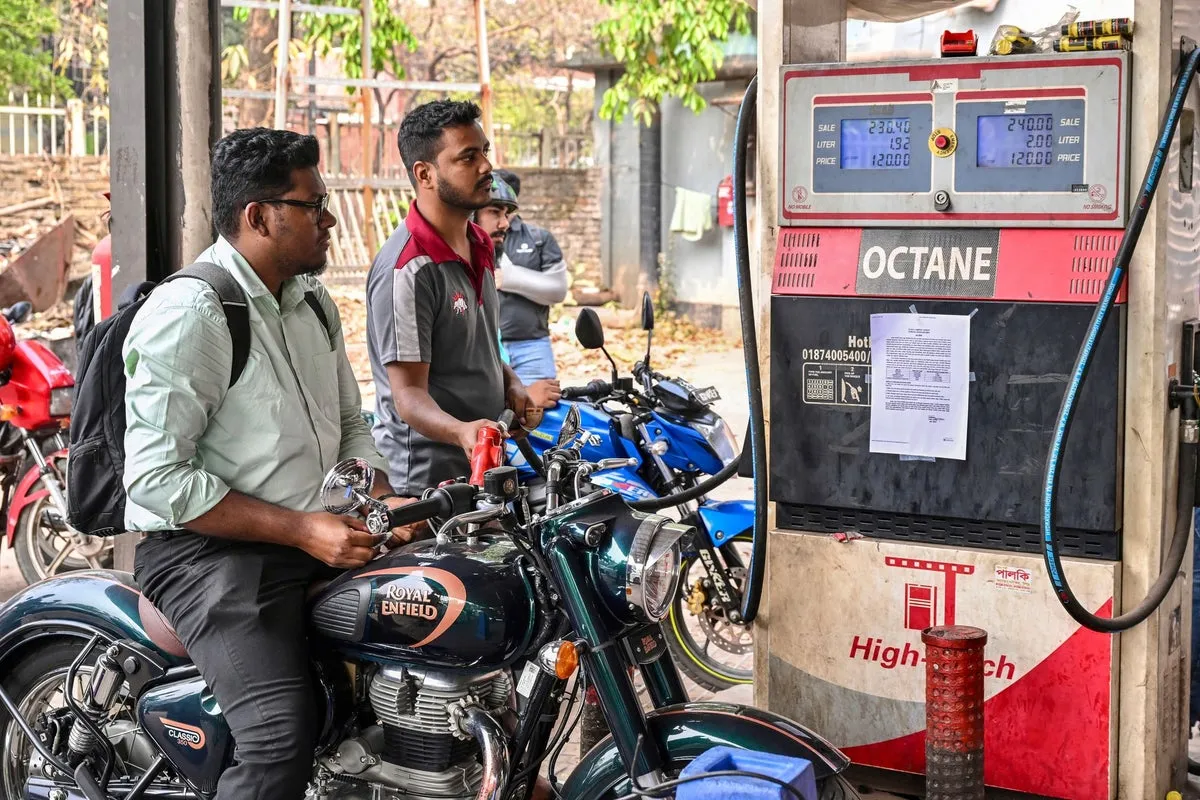
As tensions escalate in the Middle East due to the ongoing US-Iran war, countries across Asia and Europe are grappling with the implications of dwindling fuel supplies. Just before the onset of April 2026, Bangladesh announced a fuel rationing policy aimed at managing its declining reserves, a move that reflects a broader trend affecting multiple nations.
On March 4, 2026, Bangladesh’s diesel reserves had plummeted to 115,473 tonnes, enough to sustain demand for only nine days. The situation was exacerbated by the blockade at the Strait of Hormuz, through which nearly 90 percent of Asia’s crude oil purchases transit. Despite the dire circumstances, Bangladesh’s energy minister, Iqbal Hasan Mahmud Tuku, insisted, “there is no fuel shortage in Bangladesh at this moment,” a statement met with skepticism by many.
As the crisis deepened, reports emerged of chaos at fuel stations, with customers clashing over limited supplies. Miznur Rahman Ratan, from the Bangladesh Petrol Pump Owners’ Association, described the scene as chaotic, stating, “our workers are getting assaulted by the angry customers who have been forced to return without octane or petrol.” This turmoil underscores the growing frustration among the populace as they face fuel scarcity.
In response to similar pressures, Indonesia implemented its own rationing measures, capping daily fuel purchases at 50 liters per car. This was soon mirrored by Slovenia, marking it as the first European nation to adopt the same restrictions. The cumulative oil production losses from the US-Israel war against Iran reached a staggering 133 million barrels by mid-March 2026, highlighting the severity of the situation.
The European Union’s energy commissioner has acknowledged that fuel rations are being considered as a viable option to manage energy demand, reflecting a shift in policy as the crisis unfolds. Meanwhile, Bangladesh is seeking over $2.5 billion in external financing to bolster its fuel and LNG imports, a clear indication of the financial strain the country is under.
Experts warn that if the Middle East crisis persists, companies will face the choice of purchasing fuel at inflated prices or implementing further rationing measures. The uncertainty surrounding the duration of this fuel crisis in Bangladesh remains, as does the long-term impact of the US-Iran war on global oil supply. Details remain unconfirmed.
As the situation evolves, the implications of fuel rationing extend beyond mere inconvenience; they threaten to destabilize economies and provoke social unrest. The historical context of Bangladesh’s socio-political turmoil following the anti-government protests in 2024 adds another layer of complexity to the current crisis.
In summary, the imposition of fuel rationing in both Asia and Europe signals a critical juncture in global energy dynamics, driven by geopolitical tensions and supply chain disruptions. The coming weeks will be pivotal in determining how nations navigate this challenging landscape.