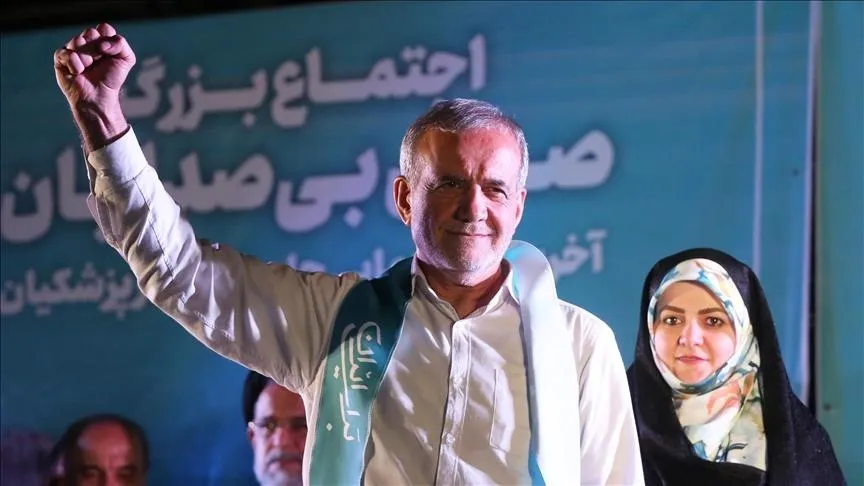
Iranian President’s Offer and Backlash
On March 7, 2026, Iranian President Masoud Pezeshkian made a controversial offer, stating that Iran would refrain from attacking neighboring countries if their airspace and US bases were not used to launch attacks against Iran. This statement has led to significant backlash within Iran, highlighting a rift in authority and the complexities of the current political landscape.
Pezeshkian’s offer was met with immediate criticism from various factions within Iran, including calls for a new supreme leader. The Iranian military contradicted Pezeshkian’s remarks, indicating a split in the government’s stance on military engagement. This internal dispute reflects how power dynamics have shifted in wartime, with established lines of authority becoming increasingly blurred.
During a state television address, Pezeshkian issued an apology to the region, attempting to clarify his position. He stated, “No more missiles will be fired at these countries unless an attack on Iran originates from those countries.” His remarks were interpreted in various ways, with some officials viewing his apology as a sign of humility and flexibility, while others criticized it as a sign of weakness.
In response to Pezeshkian’s offer, Abbas Araghchi, a senior Iranian official, characterized the US actions as a “blatant and desperate crime” following an attack on a freshwater desalination plant on Qeshm Island. This incident has further complicated the narrative surrounding Iran’s military posture and its relations with neighboring countries.
The Islamic Revolutionary Guard Corps (IRGC) also weighed in, stating that while they respect the sovereignty of neighboring countries, they would continue to target US bases. This statement underscores the ongoing tensions in the region and the complexities of Iran’s military strategy, particularly in light of recent attacks on facilities in Bahrain and other Gulf states.
Reactions from the Gulf states have been swift, with officials expressing anger over the attacks and asserting that they had communicated their non-involvement in any US-led actions against Iran. The Gulf Cooperation Council has been particularly vocal in its condemnation of Iran’s military activities, further straining relations in an already volatile region.
Pezeshkian’s remarks and subsequent apology have led to a mixed response within Iran, with some officials praising his approach while others vehemently oppose it. Ali Asghar Nakhaeirad, a prominent figure, criticized Pezeshkian’s apology, stating, “Your apology to the partners or accomplices in the martyrdom of our leader, dearer than our lives, is not wise.” This statement encapsulates the deep divisions within Iranian politics regarding the country’s military and diplomatic strategies.
As the situation continues to unfold, the implications of Pezeshkian’s offer and the internal backlash it has provoked remain to be seen. The evolving dynamics within Iran’s leadership and the response from neighboring countries will be critical in shaping the region’s future. Details remain unconfirmed.