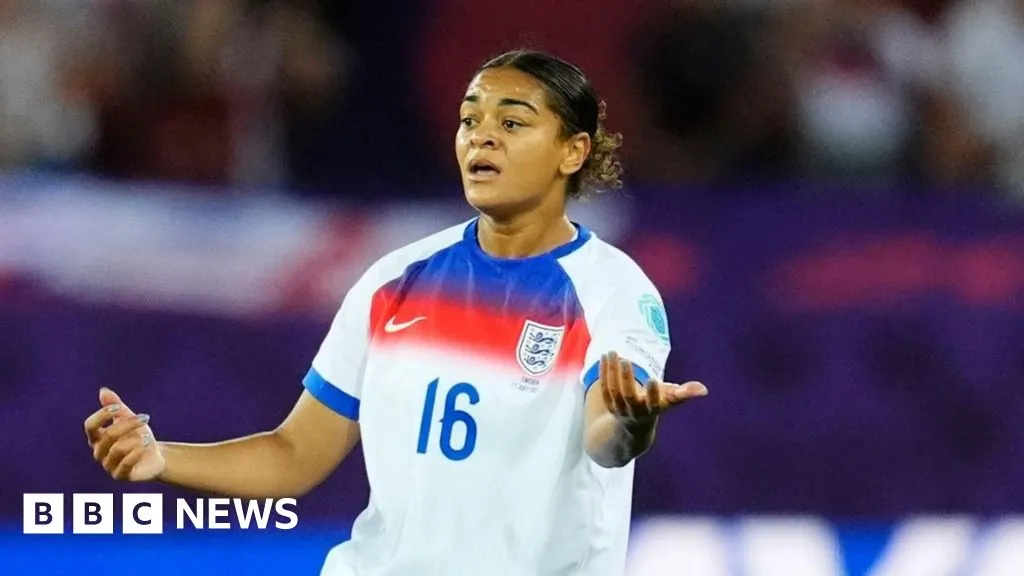
Jess Carter, a prominent player for Gotham FC and a member of the England Lionesses squad, has recently become the target of racial abuse on social media, a situation that has sparked significant legal repercussions. The incident underscores the persistent issues of racism in sports, particularly in women’s football.
The abuse originated from Nigel Dewale, a 60-year-old individual who sent racially charged messages under the username ‘Bogeyman’ during the Women’s Euro 2025 tournament, where England successfully defended their title. Dewale’s actions have not only drawn condemnation but have also led to his arrest and subsequent legal action.
Following an investigation initiated by the UK Football Policing Unit, Dewale was sentenced to six weeks in prison, although this sentence is suspended for 12 months. Additionally, he received a four-year football banning order and a three-month curfew, which restricts his movements from 8 PM to 6 AM. He was also fined £239 at Blackburn Magistrates’ Court.
During the court proceedings, Dewale pleaded guilty to one charge of malicious communications and possession of a weapon in a private place, with the weapon being an extendable baton discovered during a search of his home. This revelation adds a troubling layer to an already distressing situation.
The emotional toll on Carter and her family has been significant, leading her to cease using social media altogether. Mark Roberts, Cheshire Chief Constable, remarked on the severity of Dewale’s comments, stating they were “totally abhorrent” and caused considerable distress.
John Moran, representing the Crown Prosecution Service, emphasized that such social media offenses would not be tolerated, highlighting the need for accountability in the face of racism. He noted, “Dewale chose racism over patriotism,” a stark reminder of the societal issues that persist even in the realm of sports.
This incident not only reflects the challenges faced by athletes like Carter but also raises questions about the broader cultural attitudes towards women’s sports. Dewale’s comments, which included derogatory statements about women’s football being “diabolical” and not deserving national television coverage, reveal a troubling mindset that still exists.
As the legal consequences unfold, the community watches closely, hoping for a shift in attitudes and a stronger stance against racism in sports. Details remain unconfirmed regarding any further developments in this case, but the impact of Dewale’s actions on Carter and the wider football community is undeniable.