What the data shows
The recent win by the Paterson family in Dunfermline, Fife, Scotland, raises an intriguing question: how does a community benefit from the Postcode Lottery? The answer is multifaceted, as evidenced by the substantial winnings and the charitable contributions linked to this lottery.
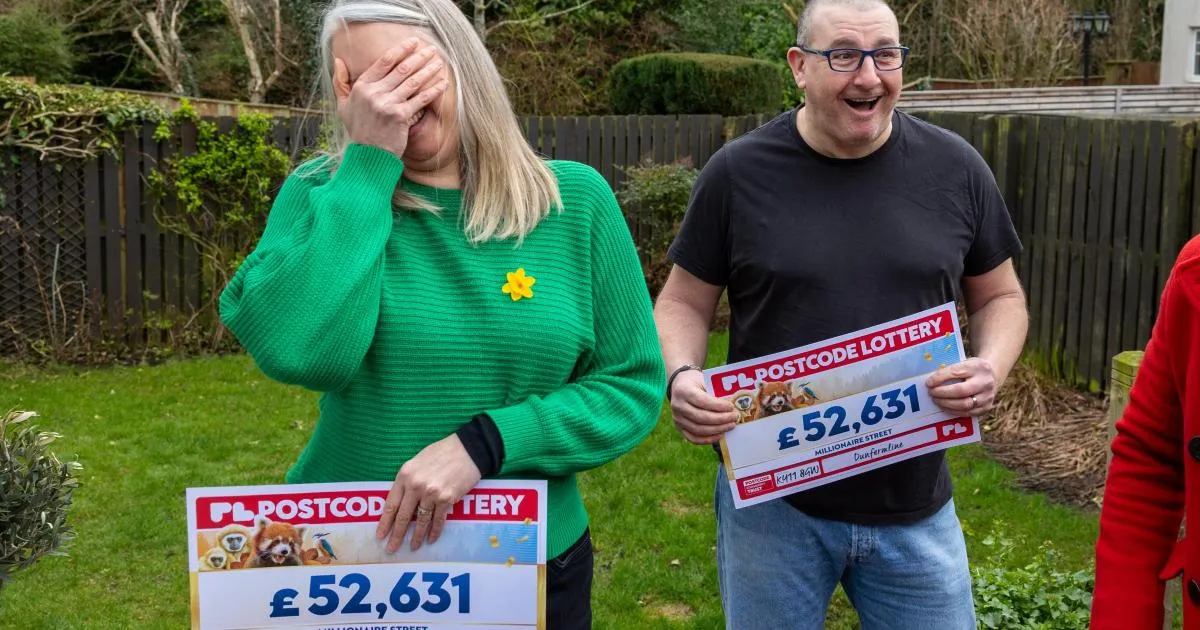
Richard Paterson, along with his family, won a remarkable £157,893 from the Postcode Lottery, with each of the three tickets they purchased yielding £52,631. This win not only highlights individual fortune but also the collective luck of the community, as 17 neighbors also shared in the prize. Such outcomes are not uncommon; the People’s Postcode Lottery awards £1,000 to residents on 20 lucky streets across the UK daily, creating a ripple effect of financial benefit within communities.
In addition to the individual gains, the Paterson family’s win has broader implications. The Pars Foundation, a local charity, received an £80,000 award from the Postcode Lottery, demonstrating how lottery funds can be redirected to support community initiatives. Since its inception in 2005, the People’s Postcode Lottery has raised over £950 million for good causes, showcasing its role as a significant source of funding for various organizations.
Richard Paterson expressed his initial thoughts upon winning, stating, “I just thought, if we ever won anything, one each.” This sentiment reflects a common hope among lottery players, where dreams of financial security and community support intertwine. His wife, Lyn Paterson, echoed this sentiment, saying, “It’s going to do so much for us,” emphasizing the transformative potential of their winnings.
Donna Murray, a neighbor who also won, recounted the moment she realized the community had struck gold: “I was the first to message the group saying, ‘Has anyone had a call from Postcode Lottery?’” This collective excitement illustrates how lottery wins can foster a sense of camaraderie and shared joy among residents.
As the Paterson family plans to use their winnings for a trip to New York, where they honeymooned, it raises the question of how such personal victories can coexist with community enrichment. The balance between individual aspirations and collective benefits remains a central theme in discussions surrounding lottery systems.
While the immediate future looks bright for the Patersons and their neighbors, the long-term impact of such lottery wins on community dynamics and charitable funding is still unfolding. The success of the Postcode Lottery in generating funds for good causes raises questions about sustainability and the ongoing role of such initiatives in supporting local communities.
Details remain unconfirmed regarding how the Paterson family’s win will influence their local community in the long run, but the initial signs are promising. The intertwining of personal success and community support through the Postcode Lottery exemplifies the potential for positive change in Dunfermline and beyond.