The numbers
Saleh Mohammadi, a promising 19-year-old wrestler, was executed by hanging on March 19, 2026, following a trial that many observers have condemned as lacking due process. Accused of killing two police officers during protests, Mohammadi’s case has drawn international attention and outrage, particularly given his status as a young athlete who previously won a bronze medal at the Saytiyev International Cup in September 2024.
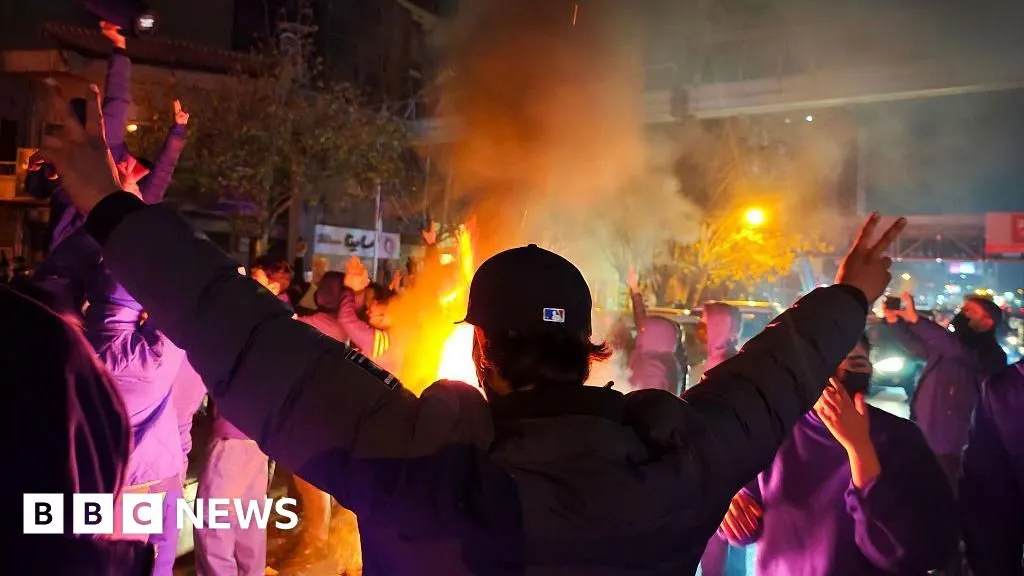
The Iranian judiciary sentenced Mohammadi to death on February 4, 2026, just one month after his arrest during protests in January. His execution, alongside two other men, Saeed Davoudi and Mehdi Ghasemi, is seen as part of a broader crackdown on dissent in Iran, where the Khamenei regime has increasingly targeted young activists and athletes.
Human rights activists have described the execution as politically motivated, asserting that it serves as a chilling reminder of the regime’s willingness to use extreme measures to suppress dissent. “His execution was a blatant political murder, part of the Islamic Republic’s pattern of targeting athletes to crush dissent and terrorize society,” stated Nima Far, highlighting the implications of Mohammadi’s case for other young athletes in Iran.
The Iranian regime has claimed that the men acted on behalf of foreign adversaries, specifically Israel and the United States, a narrative that has been met with skepticism both domestically and internationally. The Center for Human Rights in Iran (CHRI) condemned the executions, stating, “Executing these young protesters in public, after sham trials built on torture and forced confessions, is state-sanctioned murder designed to terrorize the population and send a clear message: any act of dissent will be met with death.” This sentiment resonates with many who view the actions of the Iranian government as an attempt to instill fear among its citizens.
The international community has reacted with alarm, with the U.S. State Department expressing deep concern over the execution of Mohammadi. “The United States is deeply concerned by reports that 19-year-old wrestling champion Saleh Mohammadi is facing imminent execution,” a spokesperson stated, emphasizing the need for global attention on Iran’s human rights abuses.
As the regime continues its crackdown, observers are left to ponder the implications for Iran’s athletes and the future of dissent in the country. The execution of Mohammadi, just one month after his arrest, raises serious questions about the fairness of the judicial process in Iran and the lengths to which the government will go to maintain control.
In the wake of these events, calls for a boycott of the Iranian regime in the realm of international sports have emerged. Alizreza Nader remarked, “I feel very bad for him and his family. There should be a boycott of the regime when it comes to international sport,” reflecting a growing sentiment that the global sports community must take a stand against such human rights violations.
As the world watches, the fate of other young protesters remains uncertain, with many fearing that they may face similar fates as Mohammadi. Details remain unconfirmed regarding the conditions surrounding the trials and the treatment of those arrested during the protests, leaving a cloud of uncertainty over the future of dissent in Iran.