The wider picture
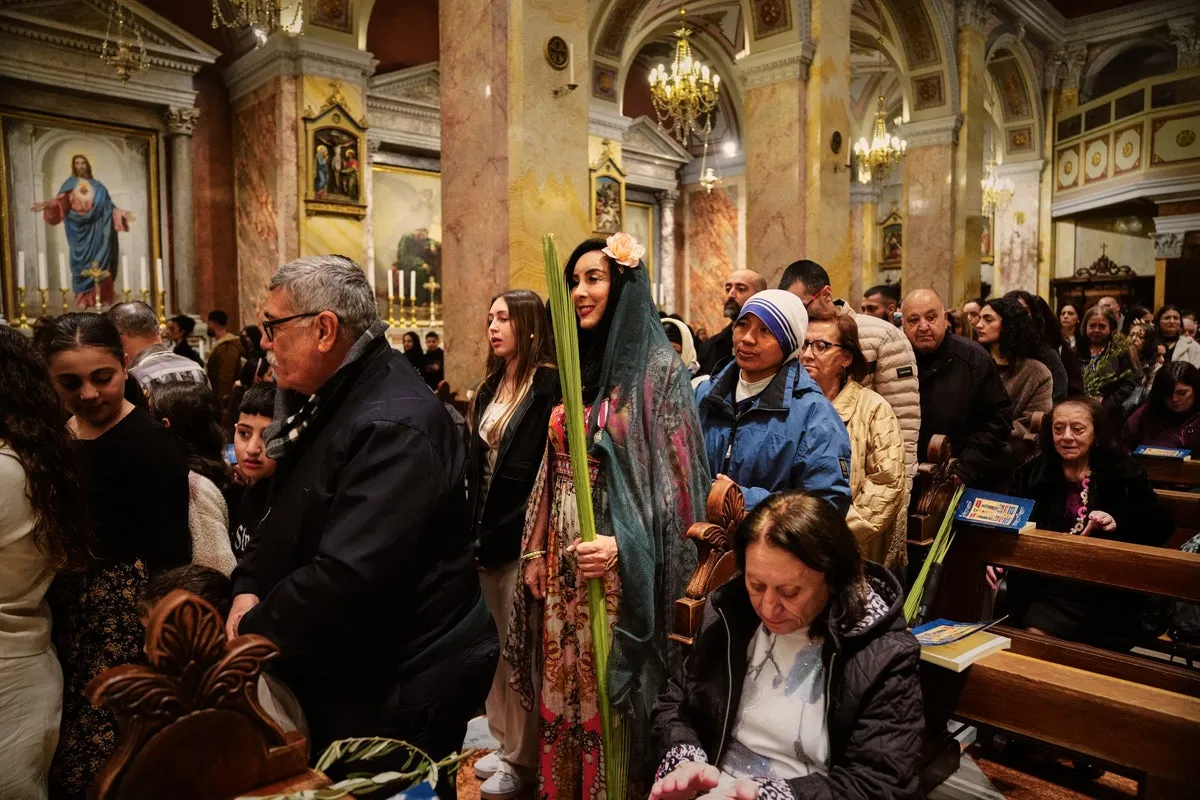
Palm Sunday is a pivotal day in the Christian calendar, marking Jesus’ triumphant entry into Jerusalem and heralding the beginning of Holy Week, which culminates in Easter. Traditionally, this day is celebrated with grand processions, where tens of thousands of Christians walk from the Mount of Olives to the Old City, waving palm fronds and singing hymns. However, this year, the observance of Palm Sunday in Jerusalem has been overshadowed by significant disruptions due to heightened security measures amid the ongoing Iran war.
On March 29, 2026, for the first time in centuries, Israeli police prevented Catholic leaders from entering the Church of the Holy Sepulchre to celebrate mass on Palm Sunday. This unprecedented action has drawn sharp criticism from various quarters, including the Catholic Church, which labeled the police decision as “a manifestly unreasonable and grossly disproportionate measure.” Farid Jubran, a prominent figure in the Catholic community, expressed his dismay, stating, “It’s a very, very sacred day for Christians, and in our opinion, there was no justification for such a decision or such an action.”
Italian Prime Minister Giorgia Meloni also weighed in on the situation, condemning the police action as “an insult not only to the faithful but also to every community recognizing freedom of worship.” Her remarks underscore the broader implications of the incident, as it raises questions about religious freedoms in a city that holds profound significance for multiple faiths. The Latin Patriarchate of Jerusalem noted that the Church of the Holy Sepulchre has been hosting masses that are not open to the public since the Iran war began on February 28, further complicating the situation for worshippers.
The backdrop of the Iran war has led Israeli authorities to impose bans on large gatherings, citing security concerns. This has not only affected Palm Sunday celebrations but has also created a tense atmosphere for religious observances in general. The United States described the incident as “an unfortunate overreach,” reflecting international concern over the implications of such restrictions on religious practices.
In Lebanon, Catholics observed Palm Sunday amid escalating conflict between Israel and Hezbollah, highlighting the regional ramifications of the ongoing violence. Reports indicate that at least 1,238 people have been killed and more than 3,500 wounded in Israeli attacks since March 2, underscoring the severity of the situation. Israeli troops have launched a ground invasion, advancing towards the Litani River, while Hezbollah has claimed dozens of operations against Israeli forces in the past 24 hours, further complicating the landscape.
The decision to bar Catholic leaders from the Church of the Holy Sepulchre has sparked outrage not only among local communities but also among international observers. Mike Huckabee, a former U.S. politician, remarked, “For the Patriarch to be barred from entry to the Church on Palm Sunday for a private ceremony is difficult to understand or justify.” This sentiment resonates with many who view the free exercise of worship as a fundamental right that should be upheld in Jerusalem.
As tensions continue to rise, the future of religious observances in Jerusalem remains uncertain. Emmanuel Macron, the President of France, emphasized the importance of guaranteeing the free exercise of worship for all religions, a statement that reflects the growing concern over religious freedoms in the region. Observers are left to ponder what the implications of this year’s Palm Sunday disruptions will mean for future celebrations and the broader context of religious tolerance in Jerusalem.
Details remain unconfirmed regarding the long-term impact of these restrictions on religious practices in Jerusalem. However, it is clear that the events surrounding Palm Sunday this year have highlighted the delicate balance between security measures and the right to worship freely, a balance that is increasingly difficult to maintain in the face of ongoing conflict.