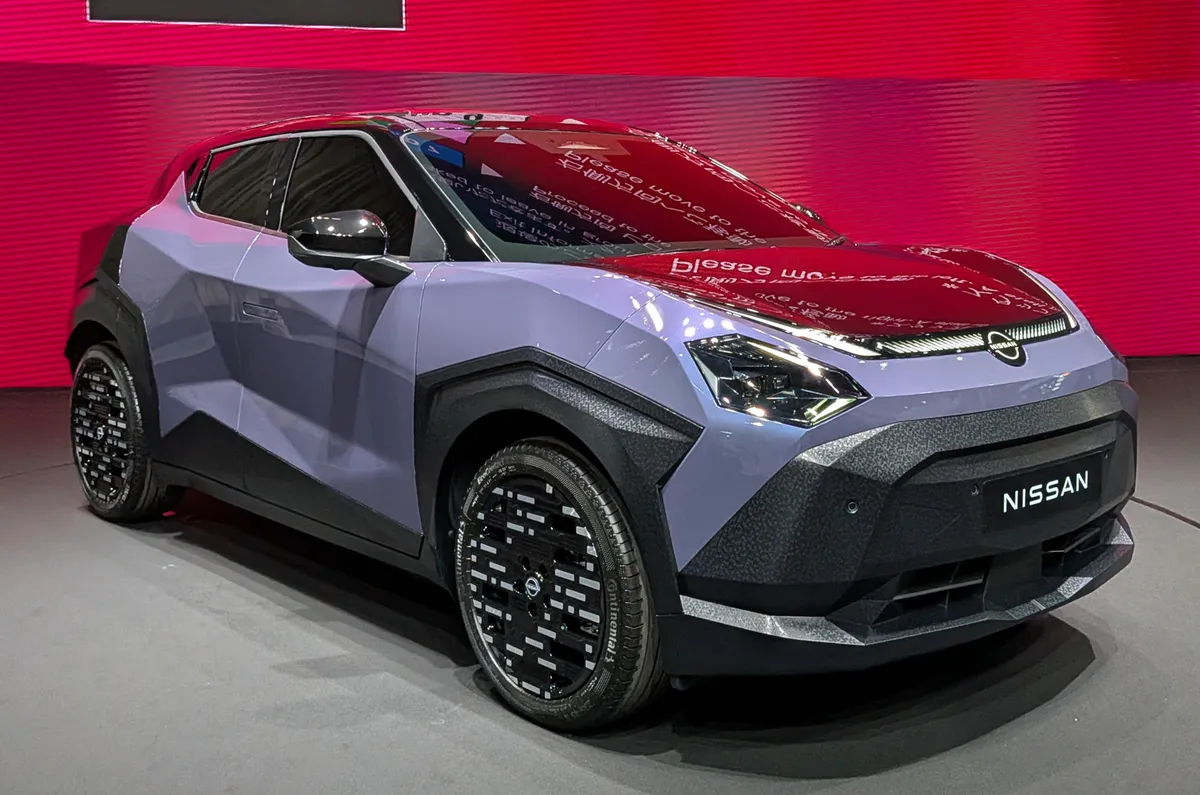
The impending launch of the Nissan Juke EV in 2027 marks a significant milestone for Nissan as it seeks to strengthen its foothold in the electric vehicle (EV) market. With over 1.5 million units sold in Europe since its debut in 2010, the Juke has established itself as a popular choice among compact crossover enthusiasts. The introduction of the Juke EV is expected to attract a new demographic of environmentally conscious consumers.
Built on Nissan’s CMF-EV platform, the Juke EV will incorporate advanced technologies, including Vehicle-to-Grid capabilities, allowing users to manage their energy consumption more efficiently. This feature is particularly appealing in the current climate, where energy management is becoming increasingly important.
Production will take place at Nissan’s Sunderland factory, which not only supports local employment but also positions the Juke EV to potentially qualify for government incentives, such as a £3,750 electric car grant. This local production strategy aligns with Nissan’s commitment to electrification in Europe, as emphasized by Massimiliano Messina, who stated, “Europe is central to Nissan’s electrification strategy, and we remain firmly committed to a fully electric future.”
The Juke EV aims to be priced similarly to its gasoline counterpart, expected to fall within the mid to high £20,000 range. This pricing strategy is crucial for appealing to a broader audience, especially as competition intensifies with models like the Ford Puma Gen-E and Kia EV3.
In terms of design, the Juke EV will feature a distinctive look inspired by the Hyper Punk concept, continuing the Juke’s legacy of bold aesthetics. Clíodhna Lyons remarked, “JUKE has always stood for bold design and a willingness to challenge convention,” reinforcing the brand’s identity.
As Nissan prepares for the Juke EV’s launch, it is clear that the vehicle is designed to cater to a variety of customer needs, from urban commuters to families seeking a versatile crossover. The Juke EV will share technology with the well-regarded Nissan Leaf, which boasts a maximum range of 386 miles with its larger battery options.
With the Juke EV, Nissan is not just adding another model to its lineup; it is making a strategic move to redefine its brand in the EV sector. The company aims to leverage the Juke’s existing popularity to transition its customer base towards electric mobility.
As the automotive landscape continues to evolve, the success of the Juke EV will depend on its ability to meet consumer expectations and adapt to the rapidly changing market dynamics. Details remain unconfirmed regarding the exact specifications and features that will be available at launch, but anticipation is building.