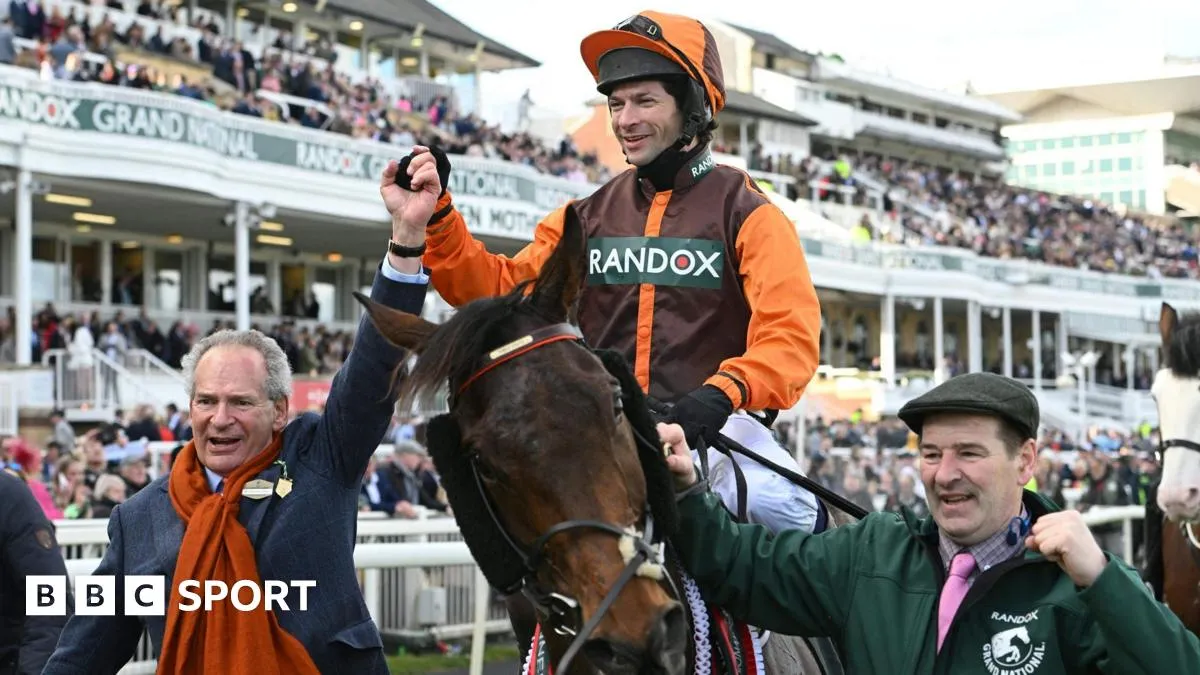
Noble Yeats was once the embodiment of hope in the racing world. Winning the Grand National in 2022 as a 50-1 outsider, he defied expectations and became a symbol of triumph against the odds. His victory—ridden by Sam Waley-Cohen—was not just a personal achievement; it marked a significant moment in racing history, as he became the first seven-year-old to win since Bogskar in 1940.
But the story took a tragic turn. Noble Yeats was retired at age nine due to arthritis, a condition that would ultimately lead to his untimely death on April 16, 2026. Just a day prior, his colic condition had become apparent—an alarming sign for any horse owner.
His last race occurred during the 2024 Christmas festival at Leopardstown, where he had already begun showing signs of discomfort. The Waley-Cohens had invested their hopes and dreams into him—his career spanned seven victories and countless memories. Yet, they faced an agonizing reality as they watched him struggle.
Robert Waley-Cohen described the moment when Noble Yeats fell ill: “He looked very uncomfortable… it was a grim moment.” The emotional weight of such moments cannot be overstated. They remind us that behind every athlete—human or animal—lies vulnerability.
In many ways, Noble Yeats transcended his role as a racehorse. His ability outstripped his looks, as Sam Waley-Cohen noted. This sentiment resonates deeply within the racing community, which often celebrates not just victories but also the spirit and resilience of its competitors.
The decision to plant a tree above Noble Yeats’ ashes at their Oxfordshire stud farm is more than just an act of remembrance; it signifies how deeply he touched those around him. It’s a tribute to a life that inspired many—a legacy that continues even after his passing.
As we reflect on Noble Yeats’ journey—from triumph to tragedy—we are reminded of the fragility of life and the enduring impact one creature can have on countless others. His story invites us to think about our connections with these magnificent animals and how they enrich our lives.
In sports, we often celebrate victories while glossing over losses and hardships. Yet, Noble Yeats teaches us that both aspects are integral to understanding greatness. His legacy is not merely in wins but in the emotional tapestry woven through his short life.
The racing world is richer for having known him—and poorer for having lost him too soon.