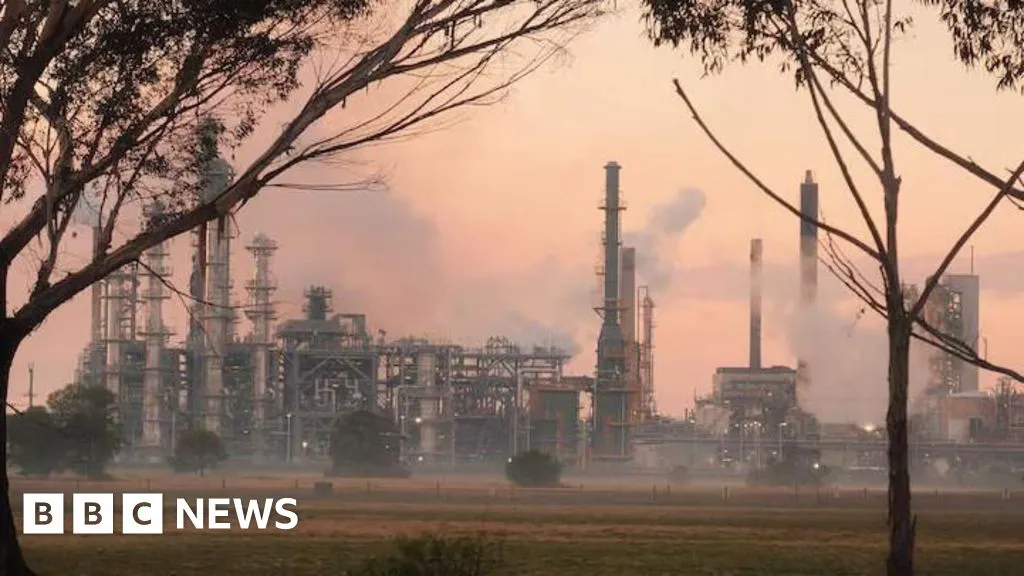
On April 16, 2026, two oil refineries—one in Australia and one in Russia—found themselves at the center of alarming incidents. In Geelong, the Viva Energy refinery experienced a major fire that lasted for 13 hours, raising questions about fuel availability in the region.
The blaze was contained to the Mogas section, crucial for producing motor gasoline. This facility is not just any refinery; it supplies around half of Victoria’s fuel and an impressive 10 percent of Australia’s total fuel needs. With a processing capacity of 120,000 barrels of oil per day, its significance cannot be overstated.
As this fire raged on, another crisis unfolded thousands of miles away. The Tuapse Oil Refinery in Russia was struck by Ukrainian drones during an overnight attack. This facility is among the largest in Russia, with a staggering capacity to process approximately 12 million tons of petroleum products annually.
The aftermath of the drone strike was severe—reports indicated that the fire intensified, spreading to neighboring reservoirs. Tragically, four casualties were reported, including two children. This incident underscores the refinery’s critical role in supplying fuel to the Russian military.
Back in Australia, the implications of the Geelong fire are starting to emerge. Chris Bowen remarked on the situation, saying, “This is not a positive development, but obviously there’s a long way to go in terms of working out just what the impact is.” Experts are concerned about how this will affect petrol supplies.
Yet, there are structural issues at play. Professor Sajid Anwar highlighted that coupled with the cancellation of six oil tankers scheduled for April delivery to Australia, this fire represents a critical stress test for Australia’s energy resilience.
The ongoing production of jet fuel and diesel suggests that while some operations continue, petrol production has been halted—indicating a complex situation within the refinery’s operations. Professor Ian Rae noted that this suggests issues within sections where hydrocarbons are modified for higher octane ratings.
Australia has significantly reduced its domestic refining capacity over recent decades—a trend that has only increased dependence on imported refined fuels. Details remain unconfirmed regarding the full impact of the Geelong fire on petrol supplies and the exact cause of the incident is still under investigation.
As both incidents unfold, stakeholders must consider their implications carefully. The interplay between these events could reshape energy strategies in both regions.