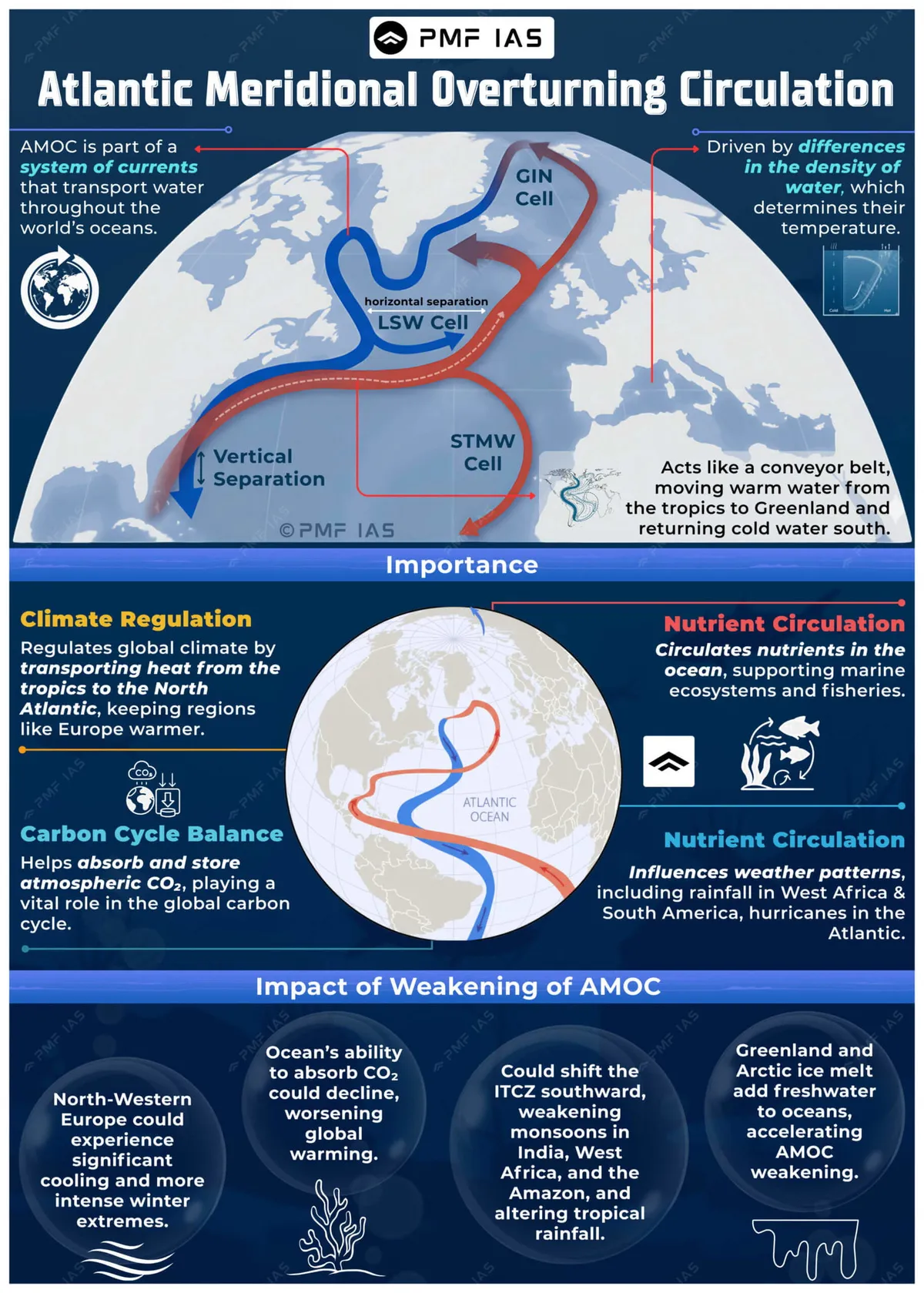
The Atlantic Meridional Overturning Circulation (AMOC) is a large-scale system of ocean currents in the Atlantic Ocean that plays a critical role in regulating global climate. This system transports warm surface waters from equatorial regions toward higher latitudes, influencing weather patterns and climate across continents. However, recent scientific studies and climate assessments have raised serious concerns regarding the weakening of AMOC, which could have far-reaching implications for the planet.
As global temperatures rise, ocean waters are warming, which reduces the temperature differences that drive the circulation of AMOC. This weakening is exacerbated by the influx of freshwater from melting ice, which decreases salinity in the North Atlantic. The reduction in salinity lowers water density, inhibiting the sinking process that is essential for AMOC’s functioning. The potential consequences of this weakening are alarming, as a slowdown in heat transport could lead to colder climatic conditions in Europe, despite the overarching trend of global warming.
Current observations suggest that AMOC may already be weaker than at any time in the last thousand years, indicating a long-term declining trend. The Gulf Stream, a vital component of AMOC, has been shifting northward, with satellite data revealing a shift of roughly 50 kilometers over the last 30 years. This change not only affects ocean currents but also has implications for sea levels along certain coastlines, particularly the eastern coast of North America, where rising sea levels could pose significant risks to coastal communities.
The potential collapse of AMOC is particularly concerning, as it could trigger abrupt and potentially irreversible climate changes across multiple regions. Estimates suggest that a complete shutdown could release between 47 to 83 gigatonnes of carbon dioxide into the atmosphere, further exacerbating global warming. Additionally, the cooling effects could reach up to 7 degrees Celsius in the Arctic, while parts of Antarctica could experience warming of up to 6 degrees Celsius. This duality of effects underscores the complexity of climate dynamics and the interconnectedness of various systems.
Experts warn that the timeline for potential AMOC collapse may be shorter than previously thought, with some estimates suggesting a commitment time of only 25 to 50 years. Johan Rockström, a prominent climate scientist, cautions, “We have to be very careful, because when one thing goes wrong, it can have these domino effects.” This statement encapsulates the precarious nature of our climate system, where the weakening of one component can lead to widespread repercussions.
Moreover, the implications of AMOC’s weakening extend beyond temperature changes. It significantly affects rainfall patterns, monsoons, and storm systems across continents, including impacts on Africa, Europe, and Asia. The potential for altered weather patterns could disrupt agricultural practices, water supply, and overall food security in vulnerable regions, amplifying the challenges posed by climate change.
Despite the alarming trends, uncertainties remain regarding the exact timeline and magnitude of impacts resulting from AMOC weakening. Some climate models predict a gradual weakening rather than a sudden collapse, but these projections are not yet confirmed. As scientists continue to study this critical system, the urgency for global action to mitigate climate change becomes increasingly clear.
In summary, the Atlantic Meridional Overturning Circulation is at a critical juncture, with signs of significant weakening that could have profound implications for global climate stability. The interconnectedness of ocean currents, temperature, and salinity highlights the complexity of our climate system and the need for comprehensive strategies to address the challenges posed by climate change.