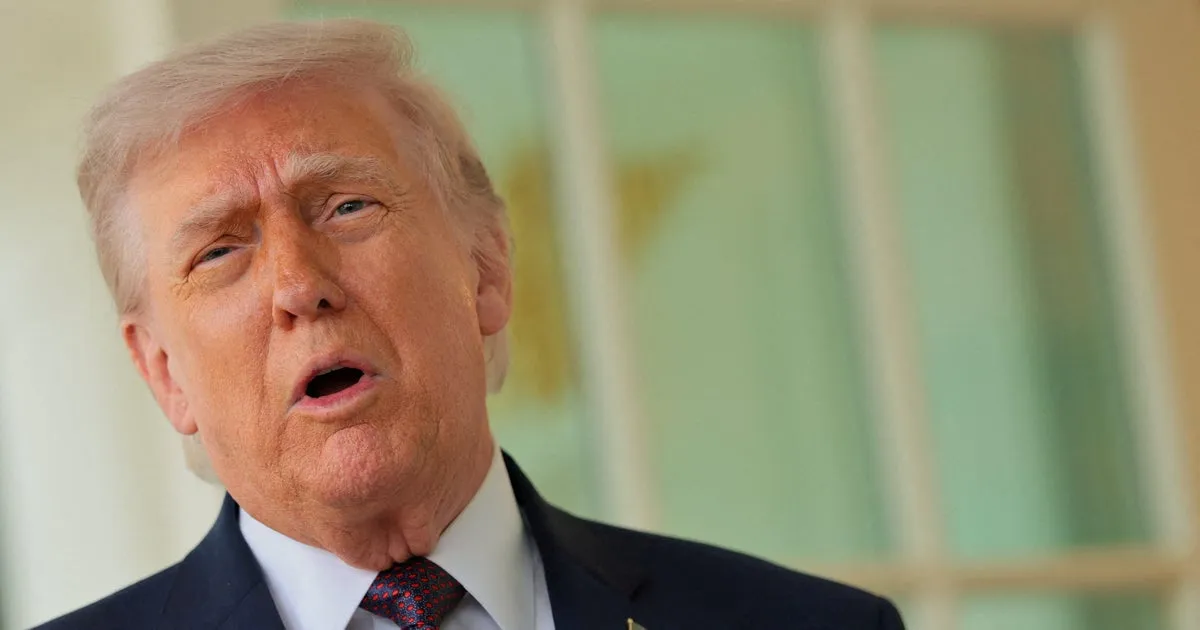
In a surprising turn of events, former President Donald Trump deleted an AI-generated image depicting himself as a Jesus-like figure from his Truth Social account on April 14, 2026, after facing intense backlash. The image, which Trump claimed was intended to portray him as a doctor, quickly became a focal point of controversy, drawing criticism from various quarters, including conservative commentators.
The immediate circumstances surrounding the image’s deletion are striking. Trump’s account, known for rarely deleting posts, made an exception in this case, highlighting the severity of the backlash. Critics, including comedian Jon Stewart, openly questioned Trump’s honesty, with Stewart asking, “Do you even care about lying to us anymore?” This sentiment reflects a broader concern regarding Trump’s relationship with truth and authenticity, especially in the context of religious imagery.
Broader implications of this incident can be traced back to Trump’s ongoing feud with Pope Leo XIV. The Pope has criticized Trump’s foreign policy and religious stances, leading to a contentious relationship. In a recent statement, Trump referred to the Pope as “weak” and “terrible for Foreign Policy,” further complicating his standing with the Christian community. This incident seems to exacerbate an already fraught dialogue between Trump and religious leaders, particularly given his assertion that he has done more for the Catholic Church than any president in the last hundred years.
Reactions to the image have been swift and varied. Comedian Jimmy Kimmel remarked that Trump’s foray into messiah status did not garner the expected positive response from the Christian community, noting, “This little detour into messiah status did not get Trump the reaction he was hoping for.” Similarly, Riley Gaines expressed confusion over the rationale behind Trump’s decision to post such an image, indicating that even supporters found it perplexing.
In a notable response, Pope Leo XIV emphasized that his messages are not intended as attacks but rather as calls for peace. This statement underscores the ongoing tension between the two figures, as Trump’s actions seem to provoke further discord rather than reconciliation. The Pope’s approach contrasts sharply with Trump’s more combative style, highlighting the differences in their respective communications.
The backlash against the image was not limited to liberal commentators; even conservative voices expressed disapproval. This suggests a significant disconnect between Trump’s actions and the expectations of his base, particularly regarding religious imagery. The incident raises questions about the former president’s understanding of the sensitivities surrounding religious symbols and figures.
As the dust settles on this incident, it remains to be seen how it will affect Trump’s relationship with religious communities moving forward. His insistence that he did not want to confuse anyone, stating, “I didn’t want to have anybody be confused. People were confused,” reflects an awareness of the potential ramifications of his actions. However, the damage may already be done, as the image and its subsequent deletion have left a lasting impression on public discourse.